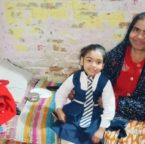



Every morning in the Chanderpuri slum community, as children set out for school in bright uniforms and with heavy schoolbags, one small girl would remain behind.
Inaya would stand quietly in the doorway of her one-room shanty, watching them disappear down the narrow lanes. Often, tears would well up in her eyes. At just four years old, she longed to join them. More than toys or sweets, what Inaya wanted most was a place in a classroom.
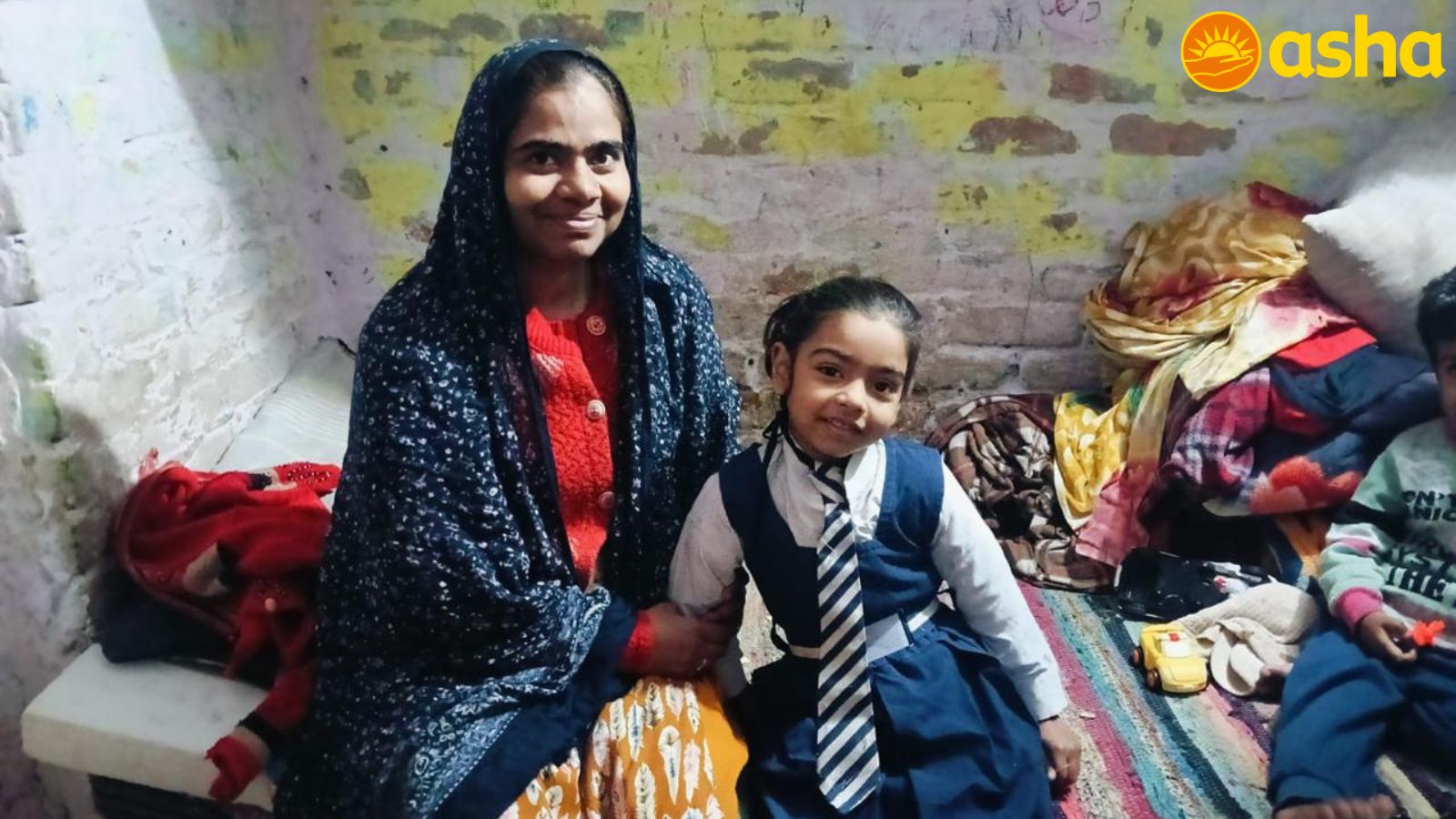
Inaya lived with her parents and younger brother in a single-room dwelling. Her dream, however, had no easy path. Her father did not believe in educating girls, fearing that schooling would “change their minds.” Having never attended school himself, he survived on odd jobs and saw little value in formal education, especially for a daughter.
Around this time last year, a turning point came in Inaya’s life.
One afternoon, an education team member from Asha Society, Sugra, noticed Inaya sitting alone outside her home, her eyes fixed on the street. Sugra knew Inaya’s mother, Sameena, well, as she visited the Asha community clinic regularly. When Sugra gently asked what troubled the child, Sameena finally gave voice to her pain. Inaya could not be enrolled in school because her father refused to allow it. Sameena herself had never been to school, but she was determined that her daughter’s fate should not be the same.
Moved by a mother’s courage and a child’s silent longing, Sugra took this on as a personal responsibility. She began visiting one government school after another, patiently enquiring about admissions and helping to prepare all of Inaya’s documents. Every morning, Sameena rose before dawn to complete her household work so that she could accompany Sugra on these visits. Door after door closed on them. Many schools turned them away.
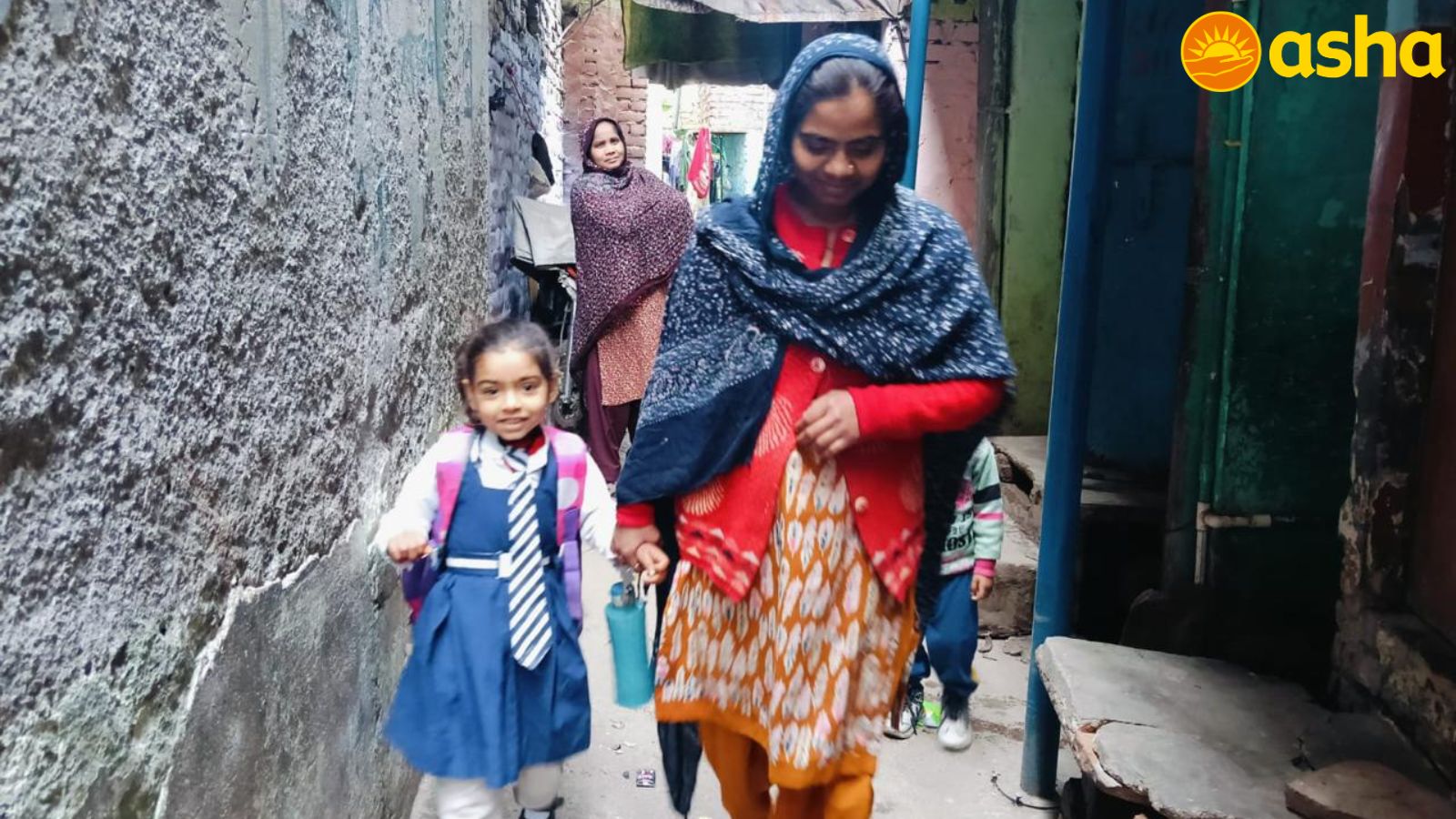
At last, Sugra was able to persuade a school principal to admit Inaya, despite complications arising from her birth certificate having been issued in another state. This was possible because of the trust the principal placed in Asha’s long-standing work in the slum community.
The final and most difficult barrier remained: Inaya’s father. With the support of respected members of the community, Sugra helped him confront his fears and clear his misconceptions. Slowly, his resistance gave way to understanding, and he agreed to let his daughter go to school.
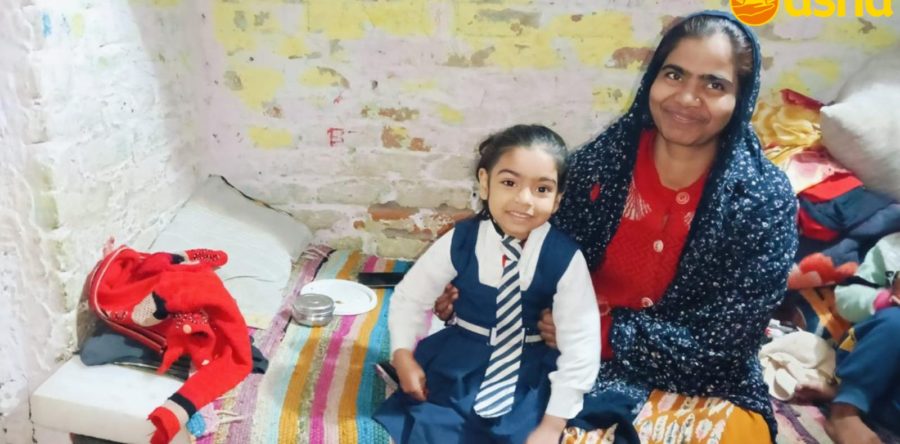
Today, Inaya walks to her afternoon-shift school in a clean, neat uniform, no longer watching from the doorway. Sugra recently attended a parent–teacher meeting and learned that Inaya is doing very well in her studies. Every morning, Inaya comes to the Asha centre to complete her homework and is an eager member of the children’s group.
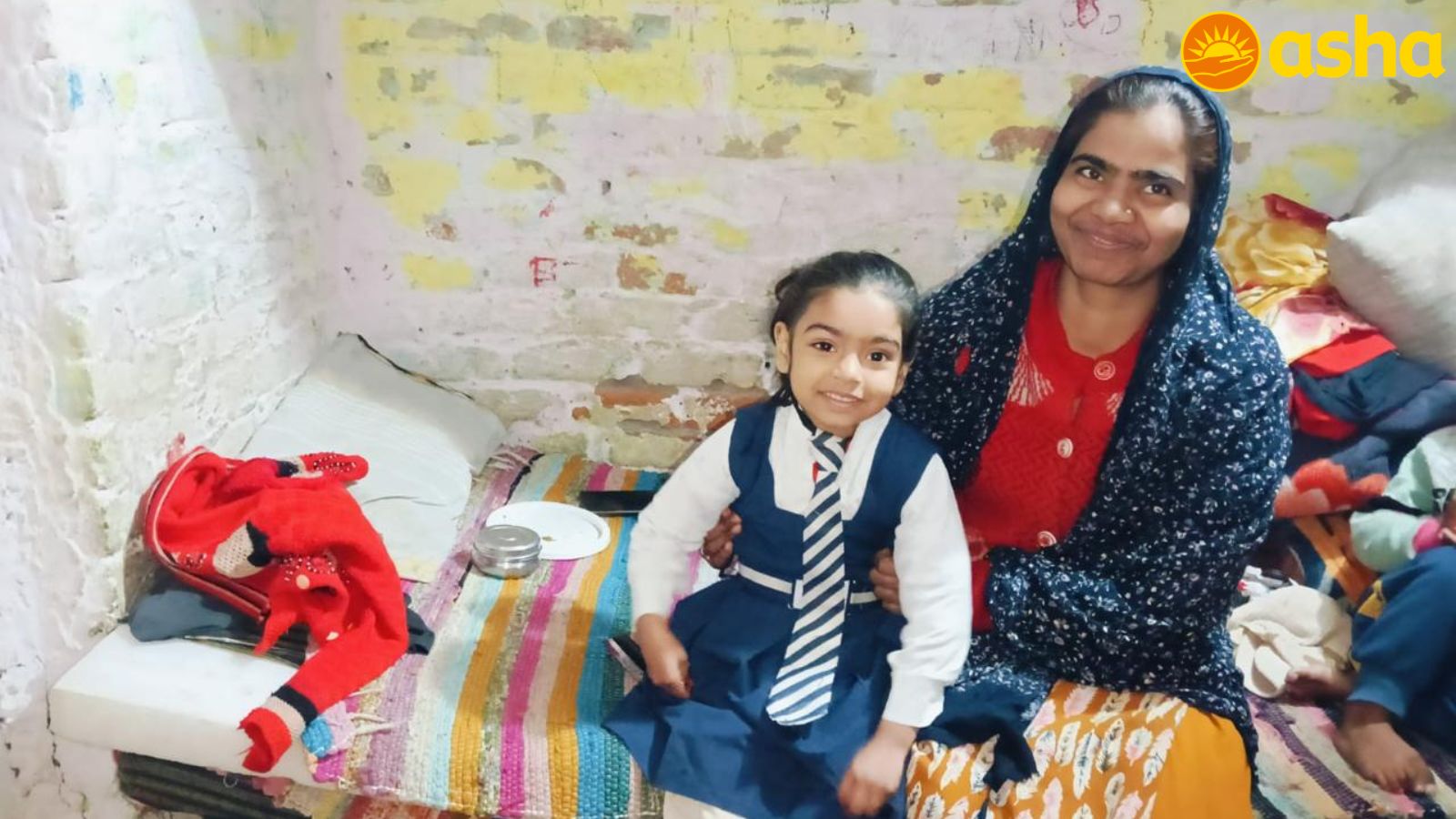
This is what Asha stands for. Asha works to ensure that every child in its slum communities is enrolled in school and attends regularly. The team completes every necessary document, even if it requires repeated visits to government offices for a single child. Asha maintains strong relationships with school authorities, attends parent–teacher meetings faithfully, and strives to secure admissions for children under the Economically Weaker Section in private-run schools, despite the many challenges involved.